
How to Clean Shower Grout (and When It Needs Regrouting Instead)
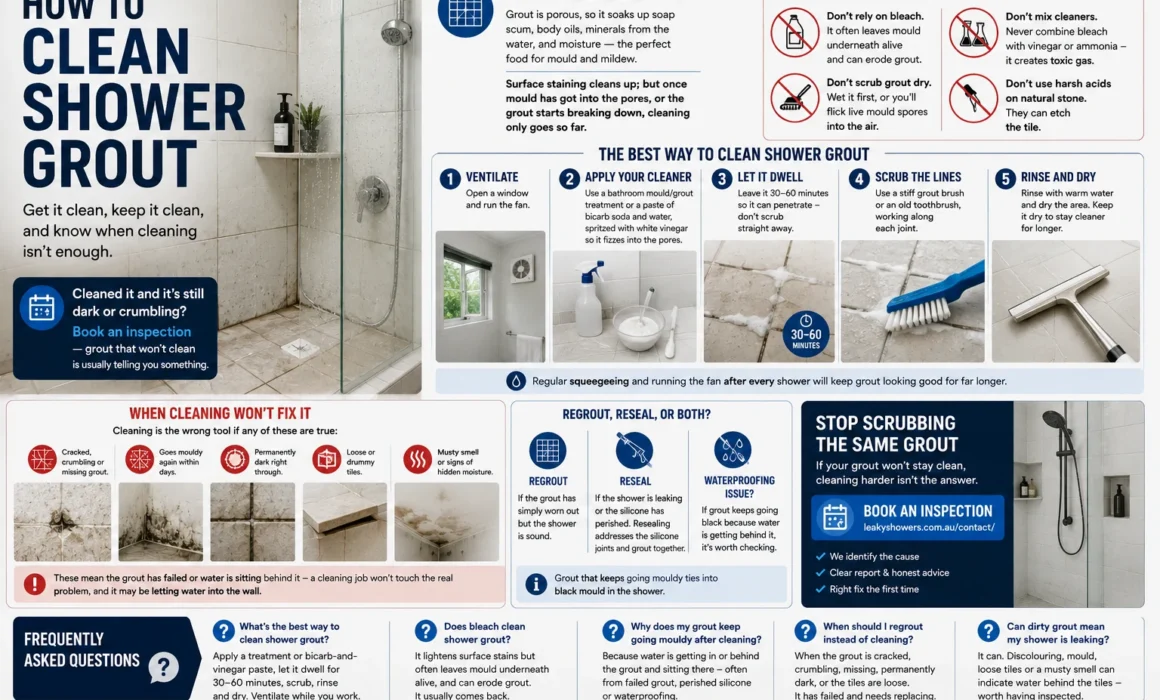
To clean shower grout, spray it with a mould-and-grime treatment or a bicarb-and-vinegar paste, leave it to work, scrub the lines with a stiff brush, then rinse and dry. That handles surface staining and grime. But if your grout is crumbling, permanently dark, or goes mouldy again within days, no amount of cleaning will fix it — that’s a regrouting or resealing job. Here’s how to clean grout properly, and how to tell when you’ve hit that point.
Cleaned it and it’s still dark or crumbling? Book an inspection — grout that won’t clean is usually telling you something.
Why shower grout discolours
Grout is porous, so it soaks up soap scum, body oils, minerals from the water, and moisture — the perfect food for mould and mildew. In a warm, humid bathroom that never fully dries, it discolours and darkens over time. Surface staining cleans up; but once mould has got into the pores, or the grout starts breaking down, cleaning only goes so far.
The best way to clean shower grout
- Ventilate. Open a window and run the fan — you’ll be using cleaning products and disturbing mould.
- Apply your cleaner. A dedicated bathroom mould/grout treatment works well. A DIY option is a paste of bicarb soda and water, spritzed with white vinegar so it fizzes into the pores.
- Let it dwell. Leave it 30–60 minutes so it can penetrate — don’t scrub straight away.
- Scrub the lines. Use a stiff grout brush or an old toothbrush, working along each joint.
- Rinse and dry. Rinse with warm water and dry the area with a cloth or squeegee. Grout that’s kept dry stays cleaner for longer.
Regular squeegeeing and running the fan after every shower will keep grout looking good far longer between deep cleans.
What not to do
- Don’t rely on bleach. On porous grout it often lightens the surface stain while leaving the mould underneath alive — so it comes back. It can also erode grout over time.
- Don’t mix cleaners. Never combine bleach with vinegar or ammonia — it creates toxic gas.
- Don’t scrub grout dry. Wet it first, or you’ll flick live mould spores into the air.
- Don’t use harsh acids on natural stone. They can etch the tile.
When cleaning won’t fix it
Cleaning is the wrong tool if any of these are true:
- The grout is cracked, crumbling or missing in places.
- It goes mouldy again within days of a thorough clean.
- It’s permanently dark right through, not just on the surface.
- The tiles feel loose or drummy, or there’s a musty smell.
These mean the grout has failed or water is sitting behind it — a cleaning job won’t touch the real problem, and it may be letting water into the wall.
Regrout, reseal, or both?
If the grout has simply worn out but the shower is sound, regrouting replaces it. If the shower is also leaking or the silicone has perished, a reseal — which addresses the silicone joints and grout together — is the lasting fix. And if the grout keeps going black because water is getting behind it, that’s often a waterproofing issue worth checking. (Grout that keeps going mouldy ties into black mould in the shower.)
Stop scrubbing the same grout
If your grout won’t stay clean, cleaning harder isn’t the answer. Book an inspection with Leaky Showers and we’ll tell you whether it needs regrouting, resealing, or something more.
Frequently asked questions
What’s the best way to clean shower grout?
Apply a bathroom mould/grout treatment or a bicarb-and-vinegar paste, leave it to dwell for 30–60 minutes, scrub the lines with a stiff brush, then rinse and dry thoroughly. Ventilate while you work.
Does bleach clean shower grout?
Bleach lightens surface stains but on porous grout it often leaves the mould underneath alive, so it returns — and it can erode grout over time. A penetrating treatment or bicarb-and-vinegar usually works better.
Why does my shower grout keep going mouldy after cleaning?
Because water is getting into or behind the grout and sitting there — often from failed grout, perished silicone or waterproofing. Until that’s fixed, it will keep going mouldy no matter how well you clean.
When should I regrout instead of cleaning?
When the grout is cracked, crumbling, missing, permanently dark right through, or the tiles are loose. At that point it has failed and needs replacing, not cleaning.
Can dirty grout mean my shower is leaking?
It can. Grout that keeps discolouring or going mouldy, especially with loose tiles or a musty smell, can indicate water sitting behind the tiles — worth having inspected.